Springtime brings warmer weather and new growth, but for many people, it also means dealing with seasonal allergies caused by pollen. Pollen is a natural part of the environment, but when it accumulates on homes, it can exacerbate allergies and cause respiratory problems. Fortunately, soft washing is a powerful cleaning method that can help reduce pollen on the exterior of a home and make the springtime more enjoyable for allergy sufferers.
What is soft washing?
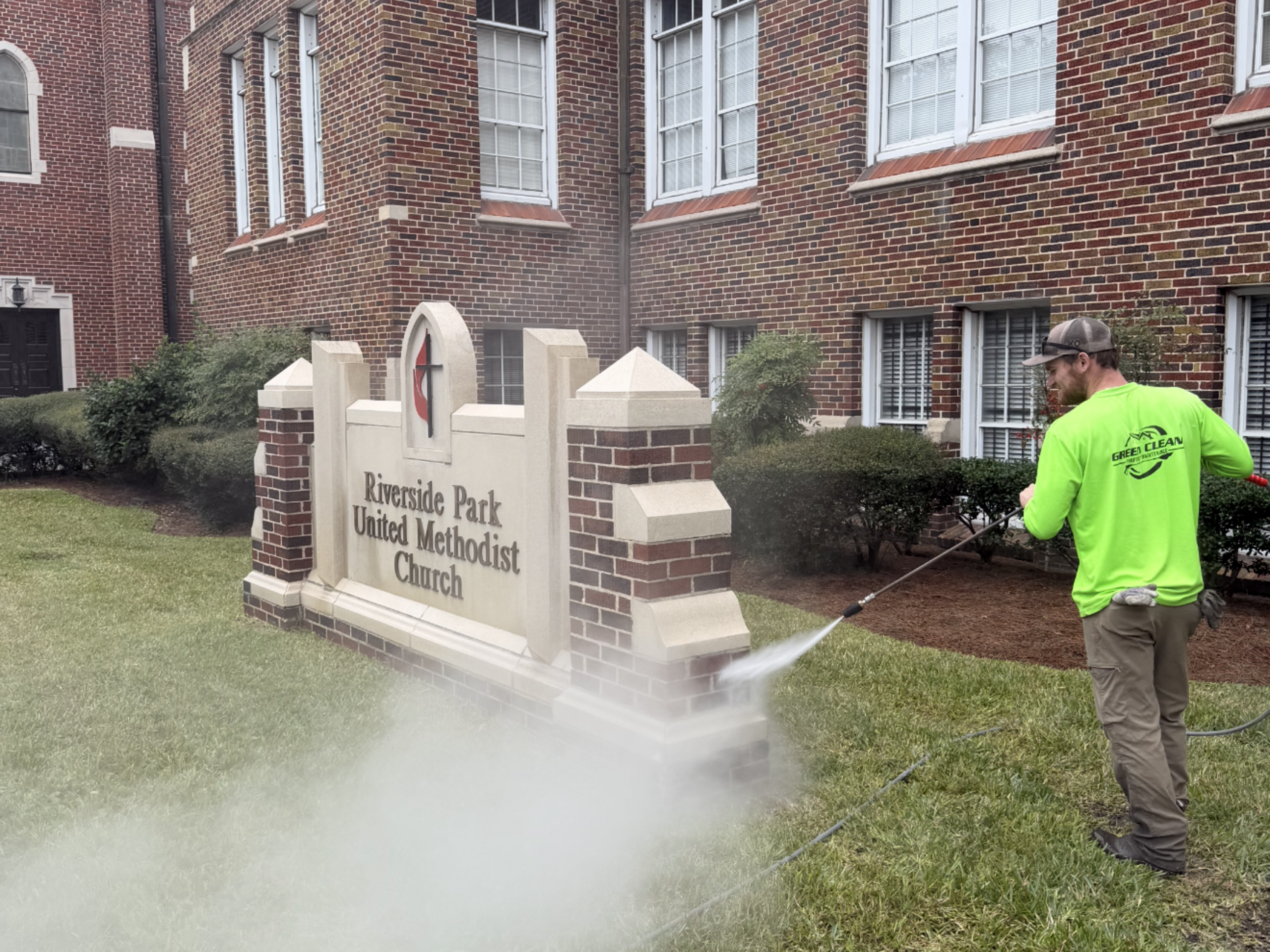
Softwashing is a cleaning method that uses a low-pressure water spray to remove dirt, grime, and other contaminants from the exterior of a building. Unlike pressure washing, which uses high-pressure water to blast away debris, soft washing uses a gentle, yet effective approach that is safe for most surfaces. Softwashing is particularly useful for removing organic stains, such as mold, mildew, and pollen, which can accumulate on the exterior of a home over time. Perfecting the ratio of chemicals to water can be tricky, so we are here to step help! At Green Clean Property Maintenance, we use a 12.5% sodium hypochlorite mixture to eliminate algae, pollen, salt, and other forms of organic growth on your property’s exterior surfaces.
How does pollen accumulate on homes?
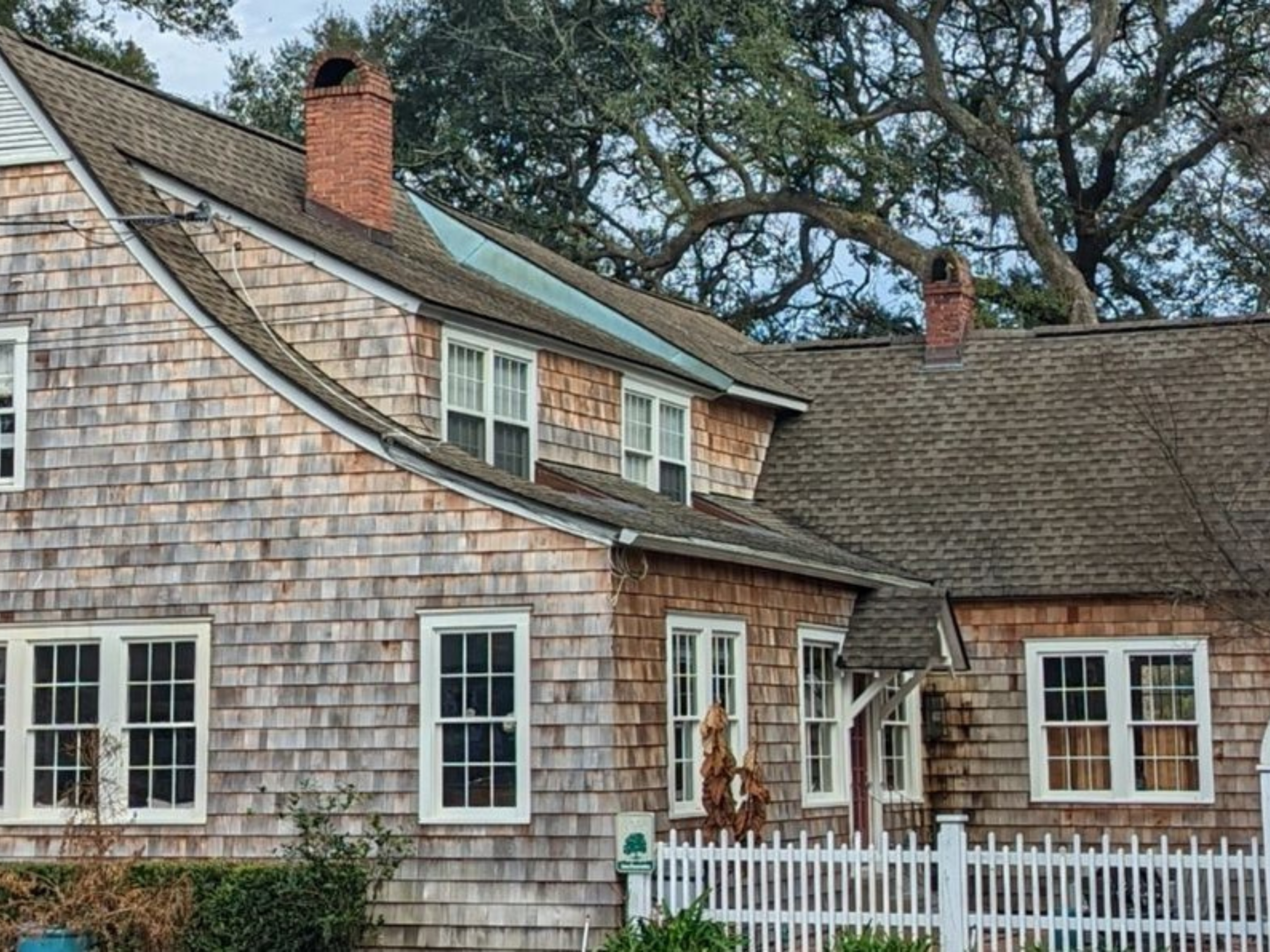
Pollen is produced by plants and trees as part of their reproductive cycle. It is carried through the air by wind and can settle on any surface it comes into contact with, including homes. Pollen can accumulate on the roof, siding, windows, and other exterior surfaces of a home, where it can remain for weeks or even months. When pollen accumulates in a home, it can exacerbate allergy symptoms, particularly in the spring when pollen levels are highest.
How does soft washing reduce pollen?
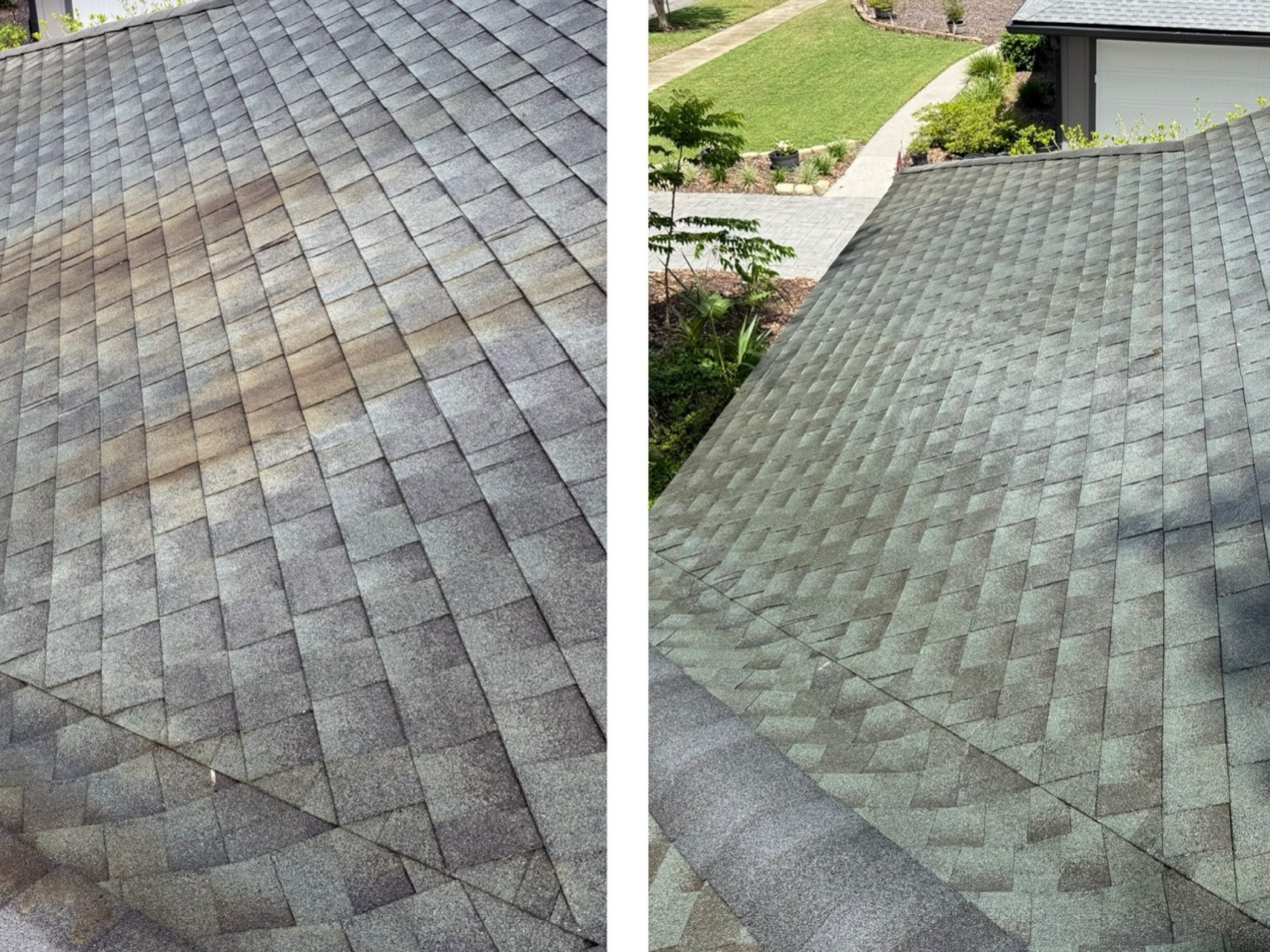
Softwashing is a highly effective way to remove pollen from the exterior of a home. The low-pressure water spray used in soft washing can dislodge pollen and other contaminants from surfaces without damaging them. The cleaning solution used in soft washing is specially formulated to kill mold, mildew, and other organic stains, including pollen. When applied to the exterior of a home, the cleaning solution breaks down the pollen and other contaminants, making it easier to remove them with a gentle rinse.
Softwashing can also help prevent the growth of mold and mildew, which can attract pollen and other allergens. When mold and mildew are allowed to grow on the exterior of a home, they create a fertile environment for pollen to accumulate. By removing mold and mildew through soft washing, the pollen has less chance of settling and causing problems for allergy sufferers.
Benefits of soft washing for allergy sufferers
Softwashing can offer several benefits for allergy sufferers in the springtime. By removing pollen from the exterior of a home, soft washing can reduce the amount of pollen in the immediate environment, making it easier to breathe. Softwashing can also help prevent the growth of mold and mildew, which can trigger allergic reactions and exacerbate respiratory problems. Additionally, by removing pollen from the exterior of a home, soft washing can help prevent pollen from being tracked inside, further reducing the risk of allergy symptoms.
Pollen is an inevitable part of the springtime, but it doesn’t have to be a constant source of misery for allergy sufferers! Softwashing is a highly effective cleaning method that can help reduce pollen on the exterior of a home, making springtime more enjoyable for those with allergies. By removing pollen, mold, and mildew, soft washing can improve the overall air quality around the home and reduce the risk of respiratory problems. With the help of a professional soft washing service, homeowners can enjoy a clean, pollen-free home this spring. Increasing curb appeal and nasal relief at the same time? ..who would have thought!